



Many small business owners in Grantham and Lincolnshire face the challenge of standing out online while sticking to a sensible budget. Creating a business website that truly connects with local customers begins with understanding who you want to reach and what you aim to achieve. This guide offers practical steps and actionable insights to help you build a strong online presence, whether you are starting from scratch or improving your current site. Bold a key concept: Business website success starts with clarity.
Quick Overview
| Main Insight | Clarification |
|---|---|
| 1. Define Clear Goals and Audience | Understand your business objectives and target customers deeply to create a tailored online presence that resonates. |
| 2. Select Suitable Platform and Hosting | Choose a web platform and hosting service that match your technical needs and budget to ensure optimal performance and growth. |
| 3. Design User-Friendly Layout | Craft a website layout that guides visitors intuitively, ensuring important information is easily accessible and engaging. |
| 4. Implement Essential Features and SEO | Integrate crucial website features and optimise for search engines to improve user experience and visibility in search results. |
| 5. Conduct Thorough Testing Before Launch | Meticulously test all functionalities and content accuracy to ensure a smooth user experience before the official launch of your website. |
Step 1: Define your business goals and target audience
Successfully launching your business website begins with crystal-clear understanding of your objectives and the customers you want to attract. This foundational step helps you create a targeted, effective online presence that speaks directly to your ideal clients.
To define your business goals, start by mapping out specific, measurable outcomes you want to achieve. These might include generating leads, selling products online, showcasing your portfolio, or establishing your brand’s credibility. Identifying the right target audience involves digging deeper than basic demographics and understanding their core motivations and challenges.
Consider these key aspects when profiling your target audience:
- Demographic details: Age range, gender, location, income level
- Professional characteristics: Industry, job role, business size
- Behavioural insights: Online habits, purchasing patterns, pain points
- Psychological factors: Goals, aspirations, challenges they face
Knowing precisely who you’re targeting allows you to craft a website that resonates authentically with your potential customers.
Research your current and potential customers through surveys, interviews, and marketing data analysis. Look for patterns in their needs, preferences, and communication styles. This information will guide everything from your website’s design to its messaging and functionality.
Expert tip: Create a detailed customer persona document that helps your entire team understand and visualise your ideal client, ensuring consistent communication and marketing approach.
Step 2: Select the right platform and hosting solution
Selecting the right website platform and hosting solution is a critical decision that will impact your online business performance, user experience, and future growth potential. Your choice will determine how easily you can manage your website, scale your online presence, and provide a smooth experience for your customers.
Choosing the right web hosting involves evaluating several key factors that align with your business needs and technical capabilities. Different platforms offer varying levels of complexity, customisation, and support, so it’s essential to match your selection with your specific requirements.
Consider these critical aspects when selecting your platform:
- Technical expertise: Your comfort level with web technologies
- Scalability requirements: Potential for business growth
- Budget constraints: Hosting and platform costs
- Customisation needs: Design and functionality flexibility
- Security features: Built-in protection mechanisms
Your website platform is the foundation of your digital presence, so choose wisely to support your business objectives.
For small businesses, options range from user-friendly website builders to more complex content management systems. Website platforms vary in complexity with solutions like WordPress offering extensive customisation, while platforms such as Wix provide simpler drag-and-drop interfaces for less technical users.
Here is a comparison of popular website platforms for small businesses:
| Platform | Ease of Use | Customisation Level | Best For |
|---|---|---|---|
| WordPress | Moderate to Easy | Extensive flexibility | Businesses with unique needs |
| Wix | Very Easy | Limited customisation | Beginners, small shops |
| Shopify | Easy | E-commerce focused | Online retailers |
| Squarespace | Easy | Stylish templates | Creative and portfolio sites |
Expert tip: Test multiple platforms using free trials to understand their interfaces and capabilities before making a final commitment.
Step 3: Design your website layout and key pages
Designing an effective website layout is crucial for capturing and retaining potential customers’ attention. Your website’s visual structure and navigation will determine how easily visitors can understand your business and take desired actions.

Professional website layouts should strategically guide visitors through your content, building trust and encouraging engagement. A well-crafted design communicates your brand’s personality and makes important information instantly accessible.
Key pages you’ll want to include:
- Home page: First impression and navigation hub
- About page: Company story and mission
- Services/Products page: Detailed offerings
- Contact page: Clear communication channels
- Testimonials page: Social proof and credibility
Effective website design transforms casual visitors into potential customers by creating an intuitive, visually appealing user experience.
When crafting your layout, consider design principles that prioritise mobile responsiveness, clear visual hierarchy, and strategic use of white space. Focus on creating a clean, uncluttered design that makes it easy for visitors to find the information they need quickly.
Expert tip: Use heatmap tools to understand how visitors interact with your website layout and continuously refine your design based on real user behaviour.
Step 4: Implement essential features and SEO practices
Transforming your website from a basic online presence to a powerful business tool requires strategic implementation of essential features and search engine optimisation techniques. Your goal is to create a website that not only looks professional but actively attracts and converts potential customers.
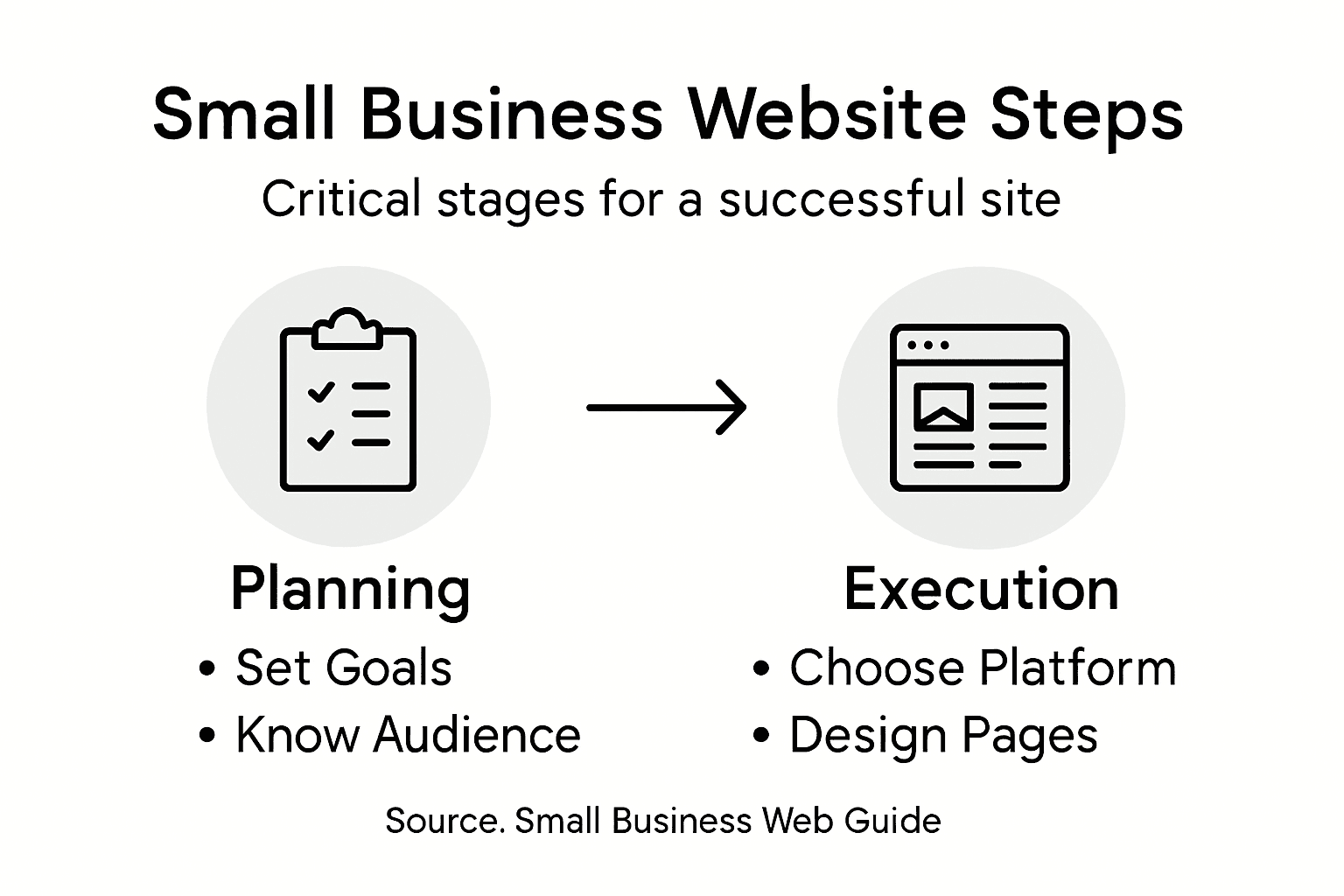
Essential website features go beyond simple design, focusing on creating a user-friendly, high-performing digital platform that builds trust and drives engagement. These features work together to enhance your online visibility and user experience.
Key features to prioritise:
- Mobile responsiveness: Seamless experience across all devices
- Fast loading speed: Minimise page load times
- Clear navigation: Intuitive menu structure
- High-quality content: Informative and engaging text
- Security certificates: HTTPS protection
- Contact forms: Easy communication channels
- Social proof: Customer testimonials and reviews
A well-optimised website is your most powerful marketing tool, working silently to attract and convert potential customers.
For local businesses, SEO best practices are crucial for increasing online visibility. This includes optimising your Google Business Profile, conducting thorough keyword research, and ensuring consistent business information across digital platforms. Focus on creating locally relevant content that speaks directly to your target audience in Lincolnshire and surrounding areas.
Below is a summary of essential website features and their business benefits:
| Feature | Description | Business Benefit |
|---|---|---|
| Mobile Responsiveness | Adapts to all devices | Increases user engagement |
| Fast Loading Speed | Quick page display | Reduces bounce rate |
| Clear Navigation | Simple, logical menus | Improves visitor satisfaction |
| SSL Certificate | Secure HTTPS connection | Builds trust and protects data |
| Social Proof | Customer reviews, testimonials | Enhances reputation and confidence |
Expert tip: Conduct a quarterly SEO audit to identify and fix any technical issues that might be preventing your website from ranking effectively in local search results.
Step 5: Test, refine and launch your site
Your website journey culminates in a critical phase of testing, refinement, and strategic launch. This final step transforms your digital project from a concept into a fully functional online representation of your business.
Launching a successful website requires meticulous preparation and systematic evaluation of every aspect of your digital platform. Before going live, you’ll need to conduct comprehensive checks to ensure a seamless user experience.
Key testing areas to focus on:
- Functionality: All links, forms, and interactive elements
- Mobile responsiveness: Performance across different devices
- Page loading speed: Optimising performance
- Cross-browser compatibility: Consistent experience
- Content accuracy: Checking spelling, grammar, information
- Security features: SSL certificate, data protection
- SEO elements: Meta descriptions, keywords, alt text
A thorough testing process is your safeguard against potential technical issues that could compromise user experience.
Prepare for launch by creating a comprehensive checklist that covers technical performance, content quality, and user experience. Consider running beta tests with a small group of trusted clients or colleagues to gather final feedback and identify any remaining issues before your official website debut.
Expert tip: Create a soft launch strategy where you gradually introduce your website to your network, allowing for incremental refinements and building anticipation.
Bring Your Small Business Website Vision to Life with WebFuZsion
Building a business website that truly reflects your goals and connects with your target audience can feel overwhelming. From choosing the right platform and designing intuitive layouts to implementing essential SEO features, the process demands expertise and attention to detail. Many small businesses struggle with creating a website that is not only visually appealing but also performs well across devices and ranks highly in local searches.
At WebFuZsion, we specialise in crafting custom websites and landing pages tailored to the unique needs of small to medium-sized enterprises. Whether you need a full website build, a redesign, or ongoing maintenance and SEO optimisation, our team in Grantham is ready to help you stand out. We understand the importance of mobile responsiveness, fast loading speeds, and clear navigation to turn visitors into loyal customers. Explore how our custom website development services can bring your vision to reality with professionalism and speed.
Ready to transform your small business website into a powerful tool that drives growth and builds trust? Visit WebFuZsion today, review our SEO services, and take the first step towards a website that works as hard as you do.
Recommended
- Role of Custom Websites - Driving Growth for SMEs | WebFuZsion Blog | WebFuZsion
- Do Businesses Still Need Websites? The… | WebFuZsion Blog | WebFuZsion
- The Importance of Having a Business… | WebFuZsion Blog | WebFuZsion
- How to Design a Website for Small Businesses… | WebFuZsion Blog | WebFuZsion
- Samtouch Office - Remote Access to your Back-Office