



Tired of seeing your Grantham or Lincolnshire business blend into the background online? Clever branding in web design can make your company stand out, turning a basic website into a powerful tool for shaping brand perception and building trust. For local entrepreneurs, aligning every visual and user experience element with your brand not only attracts attention but also encourages confidence and loyalty from customers. Discover how focusing on brand-driven web design transforms your digital presence into a memorable asset.
Key Takeaways
| Point | Details |
|---|---|
| Holistic Branding Approach | Businesses should view web design as an integral part of their branding strategy, ensuring every element reinforces their core message. |
| Visual Consistency is Key | Maintaining a uniform visual identity across platforms establishes brand credibility and enhances user trust. |
| Local Adaptation | Tailoring branding strategies to local market preferences can significantly improve customer engagement and brand relevance. |
| Avoid Common Pitfalls | Small firms must focus on consistent messaging and meaningful customer relationships to stand out in a competitive market. |
Branding in Web Design Explained Clearly
Branding represents the strategic heart of a business’s visual and emotional identity, particularly in the digital landscape. Web design attributes profoundly influence brand perception, transforming websites from mere digital platforms into powerful communication channels that shape customer understanding.
At its core, effective web design branding involves three critical dimensions:
- Visual Consistency: Ensuring colour schemes, typography, and graphic elements align with the company’s core identity
- User Experience: Creating intuitive navigation and interactions that reflect brand personality
- Emotional Resonance: Designing interfaces that evoke specific feelings and connections with target audiences
Successful branding through web design goes beyond aesthetic appeal. Brand positioning integrates customer experience with strategic marketing, reducing perceived risk and building trust. This means every design element - from logo placement to colour psychology - communicates a deliberate narrative about the business’s values, professionalism, and unique market positioning.
Businesses must approach web design as a holistic branding strategy, not just a technical requirement. Each visual and interactive element should systematically reinforce the organisation’s core message, creating a memorable digital experience that distinguishes the brand in a crowded marketplace.
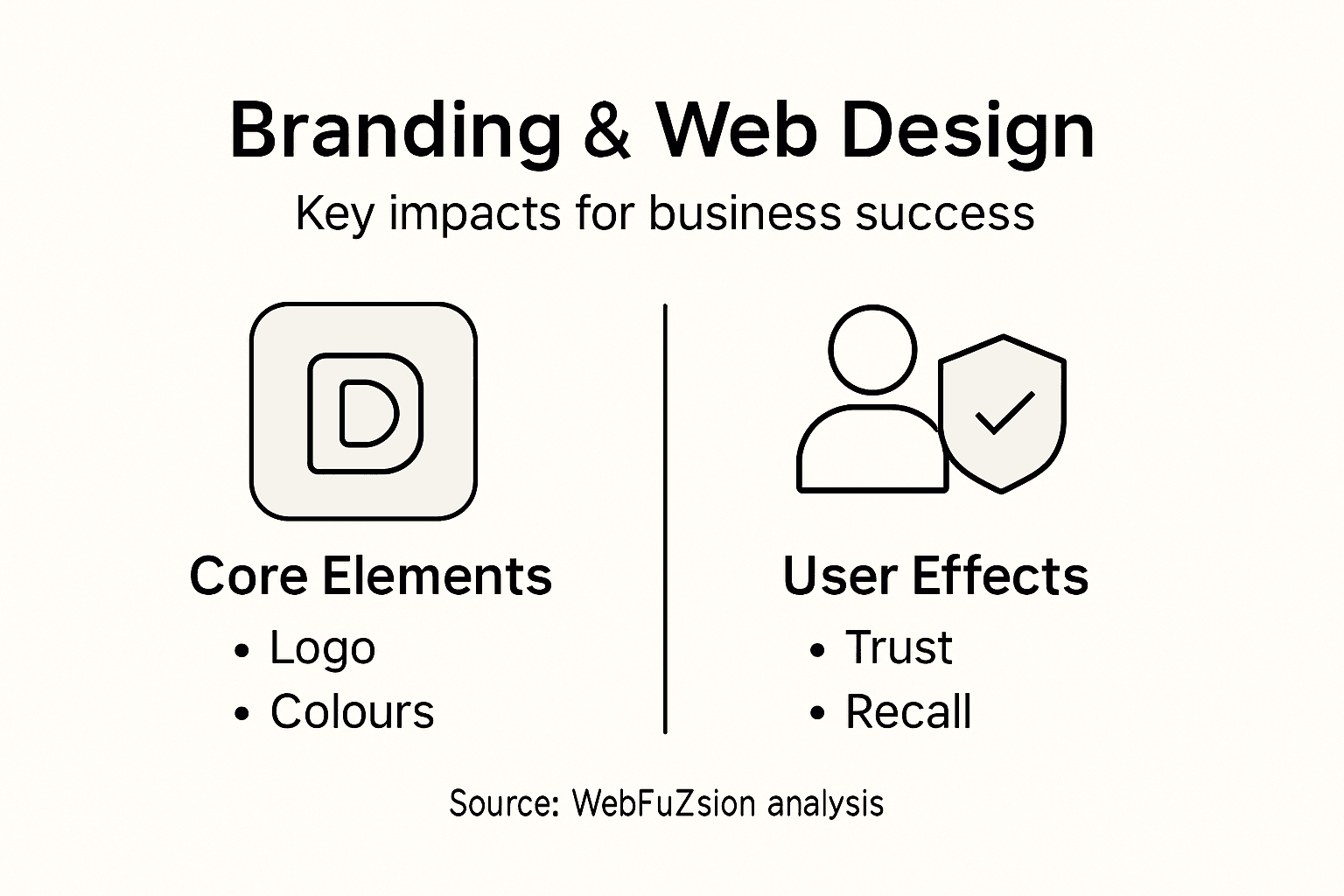
The following table summarises fundamental web design elements that influence brand perception and business outcomes:
| Web Design Element | Purpose | Impact on Branding |
|---|---|---|
| Colour Palette | Sets emotional tone | Shapes feelings and brand recall |
| Typography | Enhances readability | Reflects personality and professionalism |
| Navigation | Directs user flow | Affects confidence and trust levels |
| Graphic Elements | Visual storytelling | Reinforces values and uniqueness |
Pro tip: Conduct a comprehensive brand audit every six months to ensure your web design remains aligned with your evolving business identity and market expectations.
Visual Identity and User Trust Online
Visual identity represents the critical bridge between a business’s digital presence and user perception, transforming websites from mere information platforms into powerful trust-building mechanisms. Visual consistency across digital platforms plays a pivotal role in establishing brand credibility and facilitating positive user experiences.
The architecture of trust in digital branding comprises several key components:
- Colour Psychology: Strategically selecting colours that evoke specific emotional responses
- Typography: Using fonts that reflect brand personality and enhance readability
- Graphic Coherence: Maintaining consistent visual elements across all digital touchpoints
- Responsive Design: Ensuring visual integrity across different devices and screen sizes
Trust signals in digital branding extend beyond mere aesthetic considerations. They encompass a comprehensive approach that integrates visual design, social proof, and institutional integrity. This means every visual element - from logo placement to image selection - communicates a deliberate narrative about the organisation’s professionalism and reliability.

Successful digital brands understand that user trust is built through consistent, thoughtful visual communication. By creating a cohesive visual identity that resonates with their target audience, businesses can transform their websites from transactional platforms into compelling brand experiences that inspire confidence and engagement.
Pro tip: Regularly audit your visual branding across all digital platforms to maintain consistency and reinforce your brand’s unique visual narrative.
Local Versus National Branding Strategies
Local branding represents a nuanced approach to marketing that recognises the unique characteristics of specific geographic markets. National brand performance strategies reveal the critical importance of tailoring marketing efforts to reflect local consumer preferences and economic landscapes.
The key distinctions between local and national branding strategies include:
- Market Specificity: Local brands focus on hyper-targeted audience segments
- Cultural Relevance: Adapting messaging to regional cultural nuances
- Personalisation: Creating more intimate, community-focused brand experiences
- Flexibility: Quicker response to localised market shifts and trends
Brand localization versus globalization approaches demonstrate that successful businesses increasingly adopt hybrid strategies. This means maintaining a consistent core brand identity while allowing sufficient flexibility for meaningful local adaptations. For businesses in Lincolnshire, this could involve emphasising regional heritage, using local imagery, and speaking directly to community-specific needs.
Understanding the balance between national brand consistency and local market responsiveness is crucial. Businesses must develop sophisticated branding strategies that preserve their fundamental brand promise while speaking authentically to local audiences. This approach transforms generic marketing into meaningful, contextually relevant communication that resonates deeply with target consumers.
To clarify how branding efforts vary by scale, the table below compares local and national branding strategies:
| Aspect | Local Branding | National Branding |
|---|---|---|
| Audience Focus | Community-specific demographics | Broad, diverse population reach |
| Cultural Adaptation | Deeply tailored to local customs | Uniform messaging across regions |
| Speed of Response | Rapid adjustment to market trends | Slower adaptation, more bureaucracy |
| Brand Messaging | Personal, relatable communications | Professional, standardised campaigns |
Pro tip: Conduct regular local market research to identify unique regional preferences that can inform your brand’s nuanced communication strategy.
Brand Consistency Across Digital Touchpoints
Digital branding demands a sophisticated approach to maintaining a cohesive identity across multiple online platforms. Strategic brand consistency challenges highlight the critical importance of developing comprehensive guidelines that ensure uniform messaging and visual representation.
Key elements of maintaining brand consistency include:
- Visual Identity: Uniform colour palettes, typography, and graphic design
- Tone of Voice: Consistent messaging style across all communication channels
- Brand Values: Clear communication of core principles
- User Experience: Seamless interaction design across different digital platforms
Small businesses in Lincolnshire must recognise that brand consistency goes beyond mere aesthetic uniformity. It involves creating a holistic digital ecosystem where every touchpoint - from social media profiles to websites and email communications - tells a unified brand story. This approach builds trust, enhances recognition, and creates a professional image that resonates with potential customers.
Successful digital branding requires a strategic, intentional approach. By developing detailed brand guidelines and implementing rigorous quality control measures, businesses can ensure that their digital presence remains coherent, compelling, and true to their core identity. This consistency transforms fragmented digital interactions into a powerful, unified brand experience that speaks directly to target audiences.
Pro tip: Create a comprehensive brand style guide that details visual and communication standards for every digital platform your business utilises.
Common Branding Pitfalls for Small Firms
Small business branding requires strategic navigation through numerous potential challenges that can derail marketing efforts. Common branding mistakes for small firms reveal critical areas where businesses often stumble in establishing a compelling market identity.
The most significant branding pitfalls include:
- Inconsistent Messaging: Unclear or fluctuating brand communication
- Limited Market Research: Insufficient understanding of target audience
- Resource Constraints: Inadequate investment in branding activities
- Lack of Emotional Connection: Failure to build meaningful customer relationships
- Generic Visual Identity: Blending in rather than standing out
Branding challenges for small businesses highlight the critical importance of deliberate brand strategy. For businesses in Lincolnshire, this means moving beyond superficial marketing approaches and developing a nuanced understanding of how brand identity directly influences customer perceptions and business sustainability.
Successful small firms recognise that branding is not a luxury but a fundamental business strategy. By investing time and resources in developing a clear, consistent brand narrative, businesses can overcome resource limitations and create a distinctive market presence that resonates with their target audience. The key lies in authenticity, strategic planning, and a deep understanding of local market dynamics.
Pro tip: Conduct an annual brand audit to identify and address potential inconsistencies in your marketing approach and visual identity.
Elevate Your Brand with Expert Web Design from WebFuZsion
Building a strong digital brand identity is crucial in today’s competitive market, especially for small to medium-sized businesses in Lincolnshire and beyond. This article highlights the importance of consistent visual identity, effective user experience, and emotional resonance to foster trust and distinguish your business. If you find yourself struggling with inconsistent messaging, limited local appeal, or an unclear brand narrative, WebFuZsion offers tailored web design and development solutions that directly address these challenges.
Our professional team specialises in creating custom websites, landing pages, and SEO strategies that reflect your unique business personality and local market needs. By partnering with us, you benefit from:
- Visual coherence to reinforce your brand values
- User-friendly navigation that builds customer confidence
- Localised branding approaches that resonate with community audiences
Discover how we can transform your online presence into a trusted and memorable brand by visiting WebFuZsion. Take the next step toward a compelling and consistent brand experience today by exploring our comprehensive custom website design services and boost your business impact with expert SEO solutions. Don’t wait to build the brand your customers will trust and remember. Contact WebFuZsion now for a personalised consultation.
Frequently Asked Questions
What is the role of visual consistency in branding through web design?
Visual consistency is crucial in branding as it ensures that colour schemes, typography, and graphic elements align with the company’s core identity, shaping user perception and enhancing brand recall.
How does user experience impact brand perception on a website?
A positive user experience, characterised by intuitive navigation and engaging interactions, reflects a brand’s personality and builds trust with users, helping to establish a strong emotional connection with the audience.
What elements should be considered to create effective emotional resonance in web design?
To evoke strong emotional responses, businesses should consider elements like colour psychology, typography that reflects brand identity, and graphic coherence that aligns with user expectations and values.
Why is regular branding audits important for my web design?
Conducting regular branding audits helps ensure that your web design remains aligned with your evolving business identity and market expectations, allowing for timely adjustments to maintain brand consistency and relevance.
Recommended
- What Is Web Design and Why It Matters | WebFuZsion Blog | WebFuZsion
- Content Marketing for Web Design:… | WebFuZsion Blog | WebFuZsion
- The Importance of Having a Business… | WebFuZsion Blog | WebFuZsion
- How to Design a Website for Small Businesses… | WebFuZsion Blog | WebFuZsion
- Developing a Brand Voice for Strong Market Impact