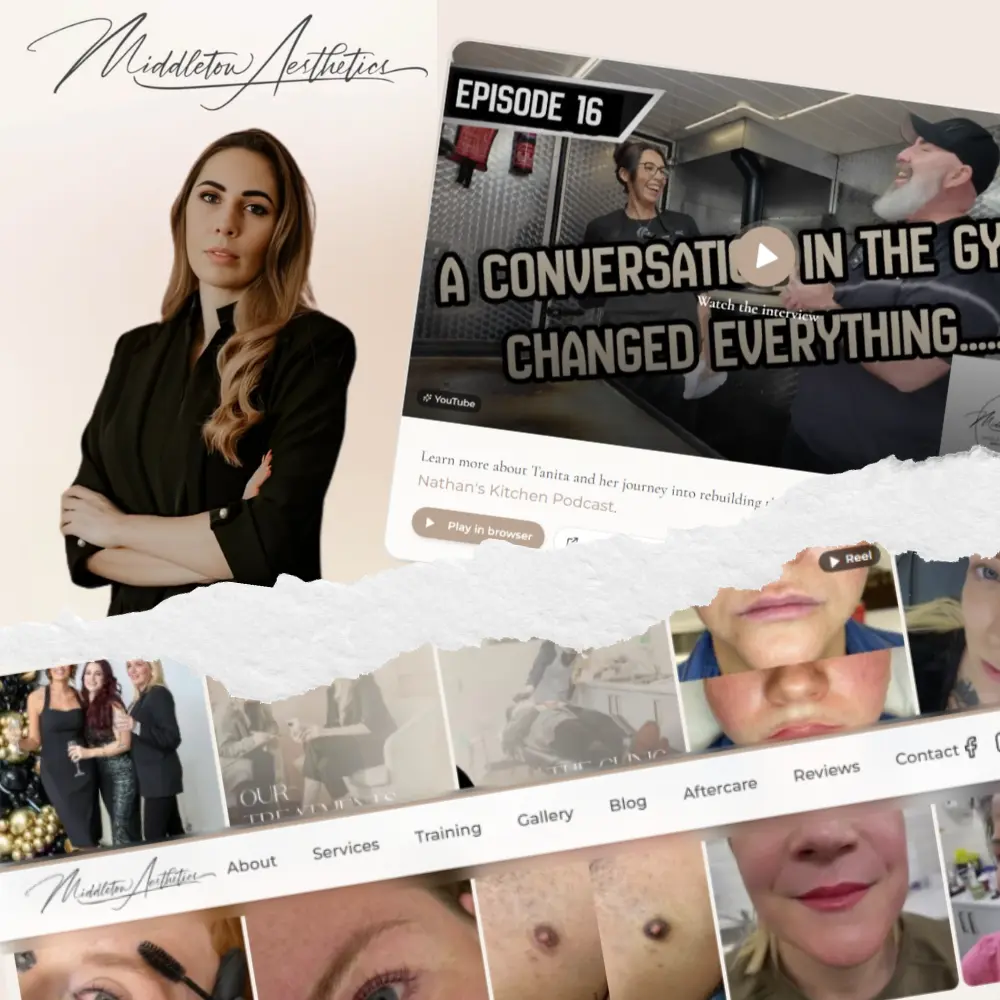



Many small businesses in Grantham and Lincolnshire struggle to make their websites stand out while working with limited budgets. Without the right approach, a site can feel cluttered, hard to use, or fail to attract customers. Understanding the core design principles behind effective web design helps you avoid costly mistakes and create an engaging online presence that builds trust and brings new enquiries.
Key Takeaways
| Point | Details |
|---|---|
| Web Design Integration | Effective web design merges aesthetic appeal with user-friendly functionality, serving as a strategic communication tool for businesses. |
| Approach Selection | Choosing the right web design methodology is crucial, taking into account aspects such as target audience and device compatibility. |
| Essential Website Elements | Key components like clear purpose and intuitive navigation significantly enhance user experience and drive business outcomes. |
| Importance of Professional Help | Avoid common pitfalls by investing in professional web design services to ensure a polished and effective online presence. |
Web Design Defined: Principles and Purpose
Web design represents the comprehensive process of planning, conceptualising, and arranging digital content for websites, blending aesthetic appeal with functional user experience. At its core, web design transforms abstract business goals into visually compelling and strategically structured online interfaces that communicate effectively with target audiences.
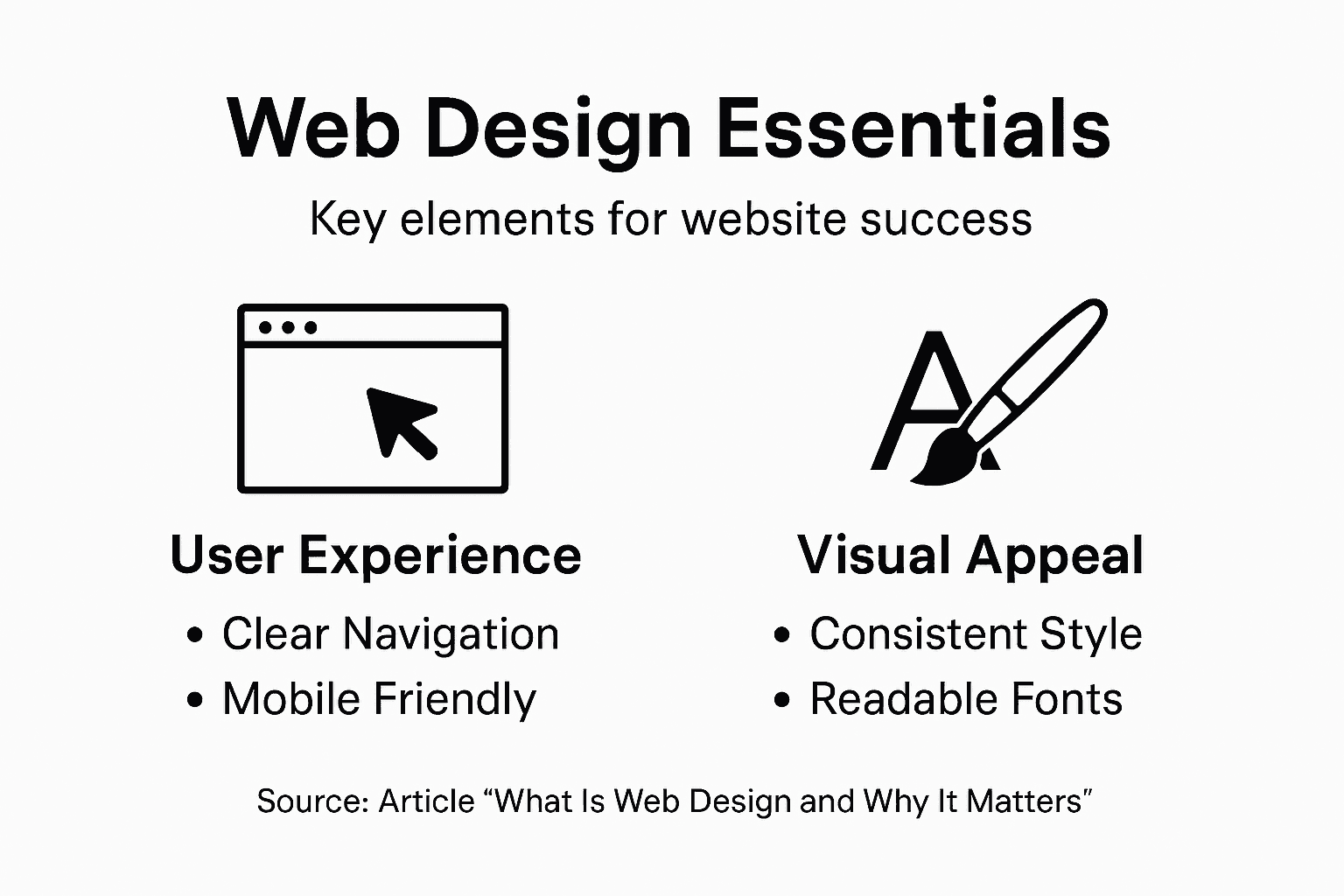
Effective web design integrates multiple critical elements, drawing from core design principles that prioritise user needs and technological compatibility. These fundamental principles include:
- Visual hierarchy and layout balance
- Intuitive navigation structures
- Responsive design across multiple devices
- Consistent colour and typography
- Clear communication of brand identity
The purpose of professional web design extends beyond mere aesthetic presentation. It serves as a strategic communication tool that enables businesses to:
- Establish credibility and brand trust
- Engage potential customers
- Facilitate seamless user interactions
- Convert website visitors into clients
- Provide accessible information
Professional designers understand that successful websites are not just about looking attractive, but about creating meaningful digital experiences that align with user expectations and business objectives. By carefully balancing visual elements, functional requirements, and user psychology, web design transforms static information into dynamic, interactive platforms.
Pro tip: Always prioritise user experience and clear communication over complex design elements that might confuse or overwhelm your visitors.
Main Types of Web Design Approaches
Web design encompasses several distinct architectural approaches that determine how websites are structured, function, and adapt to different user environments. Major web design methodologies range from traditional static layouts to sophisticated dynamic systems, each offering unique advantages for different business requirements.
These primary web design approaches can be categorised into several key types:
- Static Design: Fixed layout with consistent presentation across all devices
- Liquid/Fluid Design: Flexible width layouts that proportionally adjust to screen sizes
- Adaptive Design: Multiple fixed layout versions for specific device types
- Responsive Design: Dynamically scalable layouts that fluidly adjust to any screen
- Microservice Design: Modular architecture supporting complex, scalable web applications
Each design approach offers distinct benefits and challenges for businesses seeking an effective online presence. Static designs provide predictable visual consistency, while responsive designs ensure optimal user experience across smartphones, tablets, and desktop computers. Microservice architectures allow for greater flexibility and easier maintenance of complex web platforms.
The selection of an appropriate web design approach depends on multiple factors, including:
- Target audience demographics
- Device usage patterns
- Content complexity
- Performance requirements
- Budget constraints
Professional web designers carefully evaluate these considerations to recommend the most suitable design methodology for each unique business scenario. By understanding the strengths and limitations of different web design approaches, businesses can create digital experiences that effectively communicate their brand message and engage their target audience.
Here is a comparison of popular web design approaches and their impact on business outcomes:
| Design Approach | Ideal For | Key Benefit | Limitation |
|---|---|---|---|
| Static | Basic info sites | Fast load, low cost | Poor mobile adaptability |
| Fluid/Liquid | Varied screen sizes | Flexible on desktops | May break on small devices |
| Adaptive | Specific device targeting | Tailored UX per device | High development effort |
| Responsive | All device types | Consistent experience everywhere | Needs thorough testing |
| Microservice | Large complex platforms | Easy to scale and update | Expensive to implement |
Pro tip: Always prioritise user experience and device compatibility when selecting your web design approach, rather than focusing solely on aesthetic preferences.
Essential Elements for Effective Websites
Creating an impactful website requires careful integration of multiple critical components that work together to deliver an exceptional user experience. Key website performance elements combine technical excellence with strategic design to transform digital platforms from mere online brochures into powerful communication tools.
The fundamental elements that define an effective website include:
- Clear Purpose: Immediate communication of business goals and value proposition
- Intuitive Navigation: Simple, logical menu structures that guide users effortlessly
- Responsive Design: Seamless functionality across smartphones, tablets, and desktops
- Visual Hierarchy: Strategic use of colour, typography, and layout to direct user attention
- Performance Optimisation: Fast loading speeds and minimal technical friction
- Accessibility: Inclusive design supporting users with diverse abilities
Each of these elements plays a crucial role in creating a website that not only looks professional but also delivers tangible business outcomes. Intuitive navigation reduces user frustration, while responsive design ensures a consistent experience regardless of device. Performance optimisation directly impacts user engagement, with studies showing that even a one-second delay can significantly reduce conversion rates.
Beyond technical considerations, effective websites must also address deeper user needs:
- Build immediate trust through professional design
- Communicate brand personality clearly
- Provide easy paths to desired information
- Offer seamless interaction mechanisms
- Support user goals efficiently
Professional web designers understand that successful websites are not about aesthetic perfection, but about creating meaningful digital experiences that align closely with user expectations and organisational objectives. By carefully balancing technical performance, visual communication, and user-centric design, businesses can transform their online presence into a powerful strategic asset.
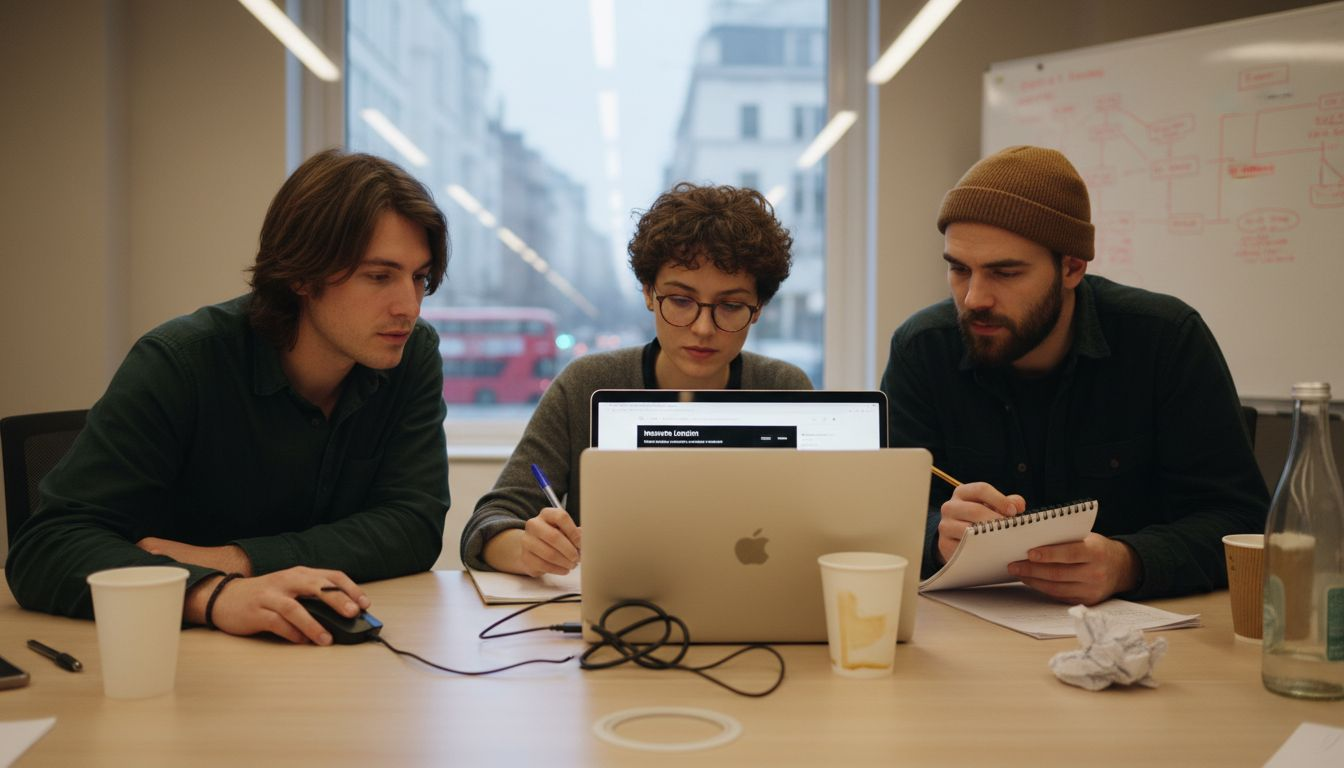
Below is a summary of how essential website elements influence user perception and engagement:
| Element | Influence on Users | Impact on Business |
|---|---|---|
| Clear Purpose | Builds immediate trust | Improves conversion rate |
| Intuitive Navigation | Reduces frustration | Boosts user retention |
| Performance Optimisation | Maintains engagement | Increases satisfaction |
| Accessibility | Welcomes all audiences | Meets legal standards |
| Visual Hierarchy | Guides user attention | Strengthens brand image |
Pro tip: Regularly audit your website’s performance and user experience, treating your digital platform as a dynamic, evolving communication tool rather than a static online document.
Costs, Risks, and Legal Considerations
Navigating the complex landscape of web design involves understanding potential financial implications, technological risks, and crucial legal requirements that can significantly impact a business’s online presence. Legal and compliance considerations represent a critical dimension often overlooked by small businesses when developing their digital platforms.
The primary risks and cost factors in web design encompass several key areas:
- Initial Development Costs: Ranging from modest template designs to comprehensive custom solutions
- Ongoing Maintenance Expenses: Regular updates, security patches, and technical support
- Potential Legal Vulnerabilities: Data protection, privacy policy compliance
- Technology Obsolescence: Rapid digital evolution requiring periodic redesigns
- Security Investment: Protecting against cyber threats and data breaches
Small businesses must carefully evaluate financial commitments and potential risks associated with web development. The initial investment can vary dramatically, from budget-friendly template solutions costing a few hundred pounds to bespoke enterprise-level designs requiring thousands of pounds in development and ongoing maintenance.
Critical legal considerations for websites include:
- Compliance with data protection regulations (GDPR)
- Implementing robust privacy policies
- Creating transparent user consent mechanisms
- Ensuring cookie usage transparency
- Protecting user data through secure infrastructure
Professional web designers understand that these considerations are not optional extras but fundamental requirements for operating legally and ethically in the digital marketplace. The potential financial and reputational risks of non-compliance can far outweigh the initial investment in proper legal and technical safeguards.
Pro tip: Always consult with a legal professional specialising in digital compliance to ensure your website meets current regulatory requirements and protects both your business and your users.
Common Mistakes in Small Business Web Design
Web design for small businesses is fraught with potential pitfalls that can undermine digital effectiveness and waste valuable resources. DIY web design approaches often lead to critical errors that compromise a company’s online performance and professional image.
The most frequent web design mistakes small businesses encounter include:
- Overcomplicated Navigation: Confusing menu structures that frustrate users
- Poor Mobile Responsiveness: Websites that fail on smartphones and tablets
- Slow Loading Speeds: Designs that create extended waiting times
- Inconsistent Branding: Visual elements that lack cohesive design language
- Neglecting Search Engine Optimisation: Invisible or poorly structured content
These design errors can have significant consequences for small businesses, potentially driving away potential customers and reducing overall digital credibility. Each mistake represents a missed opportunity to create a powerful online presence that effectively communicates brand values and engages target audiences.
Specific technical and strategic missteps often emerge in small business web design:
- Ignoring target audience preferences
- Using generic, unoriginal website templates
- Overcrowding pages with unnecessary information
- Failing to include clear calls-to-action
- Underestimating the importance of professional imagery
Successful web design requires a strategic approach that balances aesthetic appeal with functional performance. Small businesses must recognise that their website serves as a critical digital storefront, representing their brand’s professionalism, reliability, and commitment to customer experience.
Pro tip: Invest in professional consultation or design services that understand your specific business context, rather than attempting a completely do-it-yourself approach that might compromise your digital representation.
Transform Your Small Business Website with Expert Web Design Solutions
Understanding the importance of clear purpose and responsive design from the article “What Is Web Design and Why It Matters” highlights common challenges faced by small businesses like complex navigation, slow loading speeds and inconsistent branding. At WebFuZsion, we specialise in turning these pain points into compelling digital experiences that build trust, engage customers and drive conversions. Our tailored services include custom website creation, seamless redesigns, ongoing maintenance and targeted SEO enhancements designed specifically for startups and established businesses throughout the UK.
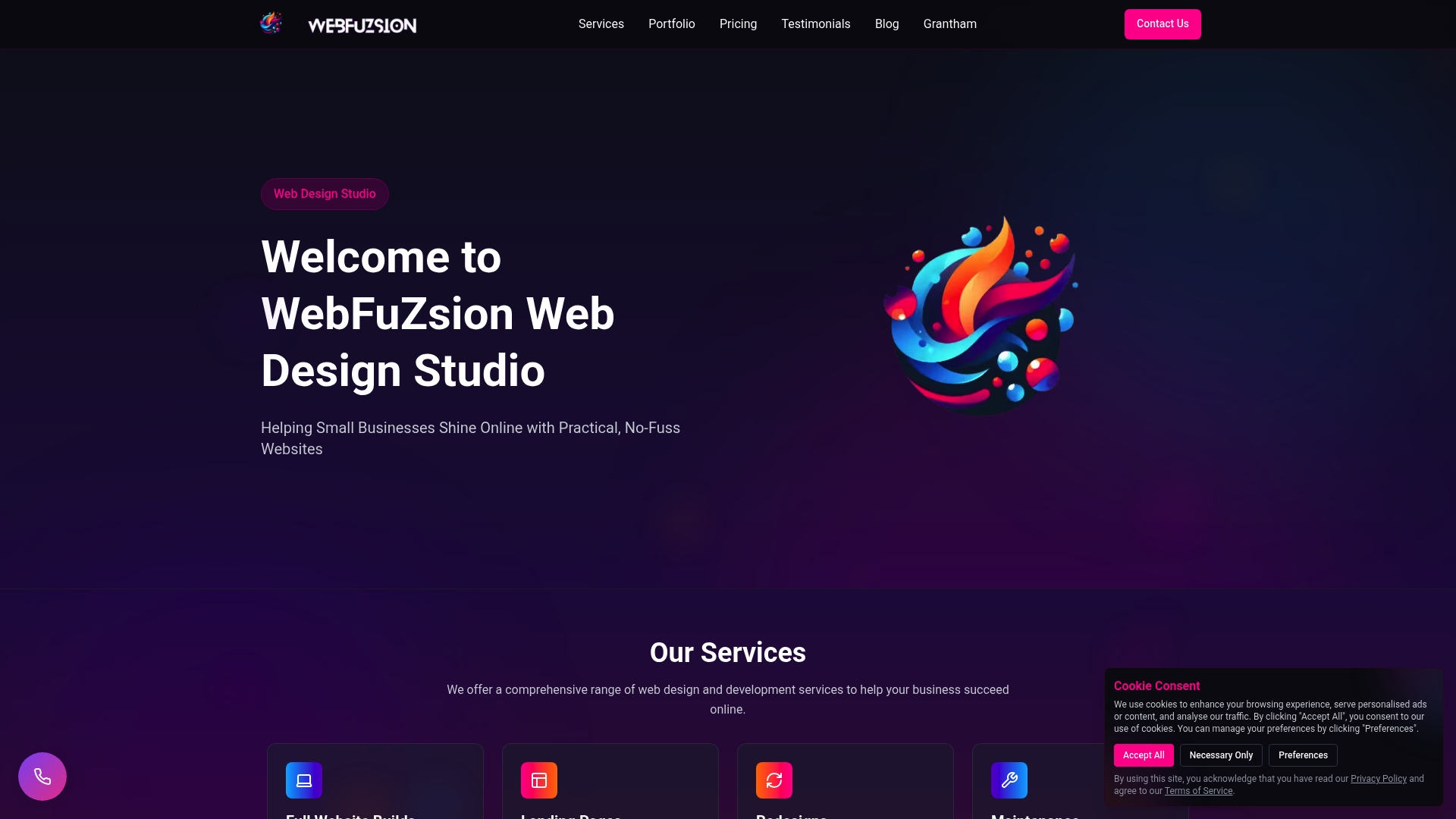
Ready to take your online presence to the next level with a user-friendly, professional website crafted to meet your business goals? Visit WebFuZsion to explore how our Grantham-based agency transforms static content into dynamic platforms. Discover comprehensive solutions for landing pages, booking systems and SEO by contacting us today. Don’t delay improving your digital storefront into a powerful asset that reflects your brand perfectly and keeps visitors coming back.
Recommended
Related Links
Frequently Asked Questions
What is web design?
Web design is the process of planning, conceptualising, and arranging digital content for websites. It blends aesthetic elements with functional user experience to create effective online interfaces that communicate business goals.