


Every business owner in Grantham knows the challenge of competing with firms across the UK while balancing local demands. Building an effective website is no longer a luxury-it is the backbone of modern business operations, shaping how customers find, trust, and interact with your brand day and night. By prioritising web development as a business asset, you gain tools to automate processes, expand your reach, and gather insights that drive growth in Lincolnshire and beyond.
Key Takeaways
| Point | Details |
|---|---|
| Importance of Web Development | Web development is essential for modern businesses, acting as a 24/7 customer engagement tool that enhances operations and scalability. |
| Differentiation from Web Design | Understand the distinction between web development and web design; the former is about functionality and systems, while the latter focuses on aesthetics. |
| Impact on Business Performance | A well-developed website can significantly affect revenue generation, lead capture, and operational efficiency. |
| Avoiding Common Mistakes | Careful planning, mobile optimisation, and thorough testing are crucial to prevent costly mistakes in web development. |
Web Development: Defining Its Business Role
Web development is far more than building a website. It’s the foundation that transforms your business into a competitive digital entity capable of reaching customers 24/7, automating processes, and scaling operations without proportional cost increases.
For small to medium-sized businesses in Lincolnshire, web development serves four critical functions:
- Customer reach: Your website becomes your always-open storefront, accessible to clients across the UK and beyond.
- Business operations: Booking systems, inventory management, and customer communication happen through your web platform.
- Brand credibility: A professionally built website signals trustworthiness to potential customers evaluating your business.
- Data collection: You gather insights about customer behaviour, preferences, and pain points directly from your site.
Think of it this way: a carpenter in Grantham can now reach customers across the Midlands without leaving their workshop. A hospitality business can manage reservations and staff schedules through a single platform. This isn’t optional anymore-it’s how modern businesses operate.
Why This Matters for Your Business
Research shows that web programming frameworks play a foundational role in enabling scalability, cost-efficiency, and security across business applications. The framework your developer chooses directly impacts whether your site can handle growth without rebuilding from scratch.
Without a proper web development strategy, you’re essentially competing with one hand tied behind your back.
- You lose potential customers who can’t find you online.
- You waste time on manual processes that could be automated.
- You miss the ability to compete with larger businesses that already have digital presence.
Your website isn’t a marketing expense-it’s a business asset that generates revenue, reduces operational costs, and builds brand authority.
The evolution of the web itself has fundamentally reshaped business. Modern web development enables interactive platforms that drive organisational restructuring and create entirely new economic models. Businesses that embrace this shift gain competitive advantages; those that don’t fall behind.
How Web Development Differs from Web Design
These terms are often confused, but they’re distinct.
Web design focuses on how your site looks and feels-the visual layout, colour schemes, and user interface. Web development is what makes it function: the code, databases, and systems that power interactions.
You need both. A beautiful site that doesn’t work frustrates visitors and damages your reputation. A functional site that looks outdated loses customers immediately.
- Design: aesthetics, user experience, visual hierarchy
- Development: functionality, security, performance, scalability
For your Grantham business, this means partnering with professionals who understand both disciplines-not just one.
To help clarify the practical differences, here is a comparison between web design and web development roles for businesses:
| Aspect | Web Design | Web Development |
|---|---|---|
| Focus | Visual appearance and layout | Site functionality and systems |
| Main Skills | Graphics, UX, colour theory | Coding, database, integrations |
| Impact on Business | Attracts and retains visitors | Enables transactions, automation |
| Risk if Neglected | Poor first impressions | Broken features or security flaws |
The Real Business Impact
Web development directly affects your bottom line through several measurable channels:
- Revenue generation: E-commerce capabilities allow direct sales through your website.
- Lead generation: Contact forms and inquiry systems capture potential customers automatically.
- Customer retention: Email automation, loyalty systems, and personalised experiences keep customers returning.
- Operational efficiency: Automated processes reduce staff time spent on administrative tasks.
- Market expansion: Geographic boundaries disappear when your business operates online.
Small businesses often underestimate these impacts until they implement a proper web development strategy and see results.
Pro tip: Start by defining what you want your website to achieve-revenue, leads, bookings, or customer communication-then work backwards with your developer to build the right technical foundation.
Website Types for Modern Enterprises
Not all websites serve the same purpose. The type you choose depends entirely on what you want your business to achieve. Picking the wrong type wastes money and frustrates both you and your customers.
Modern enterprises need digital platform types tailored to business models and target audiences. The classification helps you select the right foundation from the start.
Here are the main website types your business might need:
- Corporate information sites: Showcase your company, services, and expertise. Ideal for establishing credibility.
- E-commerce platforms: Sell products directly online with shopping carts, payment systems, and inventory management.
- Service-oriented sites: Allow customers to book appointments, request quotes, or access support.
- Interactive portals: Enable customer accounts, dashboards, and personalised experiences.
- Content hubs: Build authority through blogs, resources, and educational materials.
Which Type Fits Your Business?
A carpentry firm in Grantham needs something different than a hospitality business. Your website type should solve real problems for your customers.
Service businesses benefit from booking systems and service pages. Customers can view availability, book appointments, and pay online without calling. This reduces administrative work significantly.
E-commerce businesses need product catalogues, shopping carts, and secure payment processing. The website becomes your primary sales channel, operating 24/7.
B2B companies often use lead generation sites with contact forms, case studies, and proposal requests. The goal is capturing qualified prospects, not immediate sales.
The right website type generates revenue and reduces operational costs whilst aligning with how your customers actually want to interact with you.
Custom websites designed specifically for your business outperform generic templates because they solve your unique challenges. A standard template might look professional, but it won’t have the specific functionality you need.
Key Features by Website Type
Different types prioritise different features:
Information Sites: Clear navigation, mobile-friendly design, contact information, testimonials

E-commerce Platforms: Product search, filtering options, secure checkout, customer reviews, wishlist functionality
Service Sites: Online booking, service descriptions, staff profiles, appointment confirmations
Content Platforms: Search functionality, category organisation, comments, social sharing
Hybrid Sites: Combination of the above, allowing customers multiple ways to engage
Your chosen type determines what your developer builds and how much it costs. A simple information site costs less than a complex e-commerce platform with inventory management and multiple payment gateways.
Making Your Selection
Start by answering three questions:
- How do customers interact with you currently?
- What tasks consume the most staff time?
- What revenue or efficiency gains would matter most?
Your answers reveal which website type serves your business best.
Pro tip: Start with one core website type, then expand features as you understand what your customers actually use-avoid paying for complexity you don’t need.
Key Features That Drive Online Success
Having a website isn’t enough. Thousands of websites exist that generate zero business because they lack the features customers actually need. The difference between a website that works and one that doesn’t comes down to specific, purposeful features.
Your website must answer customer questions immediately and make taking action simple. When visitors arrive, they should understand exactly what you offer within seconds.
Here are the critical features every business website needs:
- Clear value proposition: State what you do and why customers should choose you. Do this above the fold.
- Strong calls-to-action: Guide visitors towards booking, buying, or contacting you. Make buttons obvious.
- Contact information: Phone, email, and contact forms should be easy to find on every page.
- Mobile responsiveness: Most visitors use phones. Your site must work flawlessly on all devices.
- Fast loading speed: Slow sites lose customers. Pages should load in under three seconds.
- Trust signals: Customer testimonials, certifications, and real photos build credibility instantly.
Building Trust Through Authenticity
Essential website elements include real employee photos and customer testimonials that demonstrate genuine business operations. Generic stock images damage credibility; actual people from your Grantham team build confidence.
A hospitality business showing real staff and actual guest reviews converts visitors far better than polished corporate photography. Your customers want to know who they’re dealing with.
An informative About Us page tells your story. Visitors want to understand your background, values, and why you care about quality. This is where personality matters-be genuine, not corporate.
Visitors decide whether to trust you in seconds. Authentic details like real team photos, genuine testimonials, and transparent information are your most powerful conversion tools.
Features That Reduce Your Workload
The best websites automate repetitive tasks. Your time is valuable; your website should work for you, not against you.
Booking systems eliminate phone calls for service businesses. Customers book directly, you receive confirmations automatically, and scheduling conflicts disappear.
Contact forms capture leads without requiring staff to answer calls during busy periods. Automated responses confirm receipt whilst you address enquiries systematically.
Email automation sends follow-up messages, notifications, and promotions without manual intervention. One setup does the work repeatedly.
Live chat answers common questions instantly. Many visitors leave if they can’t get quick answers. Chat features reduce support tickets significantly.
Optimisation for Conversion
Optimised landing pages ensure visitors understand your value proposition immediately, turning browsers into customers. Every page serves a purpose and guides visitors towards action.
Your homepage shouldn’t overwhelm visitors with options. Lead them towards your primary goal-whether that’s booking, buying, or contacting you.
Clear navigation menus help visitors find what they need. Confusing menus frustrate users and increase bounce rates. Organisation matters.
Search functionality becomes essential as your site grows. Visitors expect to search rather than browse through lists.
Product filters on e-commerce sites help customers find exactly what they want without endless scrolling.
These features work together. Each one removes friction from the customer journey.
Pro tip: Start with the five features your customers need most, then expand-avoid feature bloat that complicates navigation and slows your site.
Cost Considerations and Investment Value
Web development costs vary wildly. A simple brochure site costs differently than a complex e-commerce platform. Understanding what you’re actually paying for helps you make smarter decisions about your investment.
Too many business owners focus only on the initial build cost and ignore what comes after. That’s where most financial problems begin.
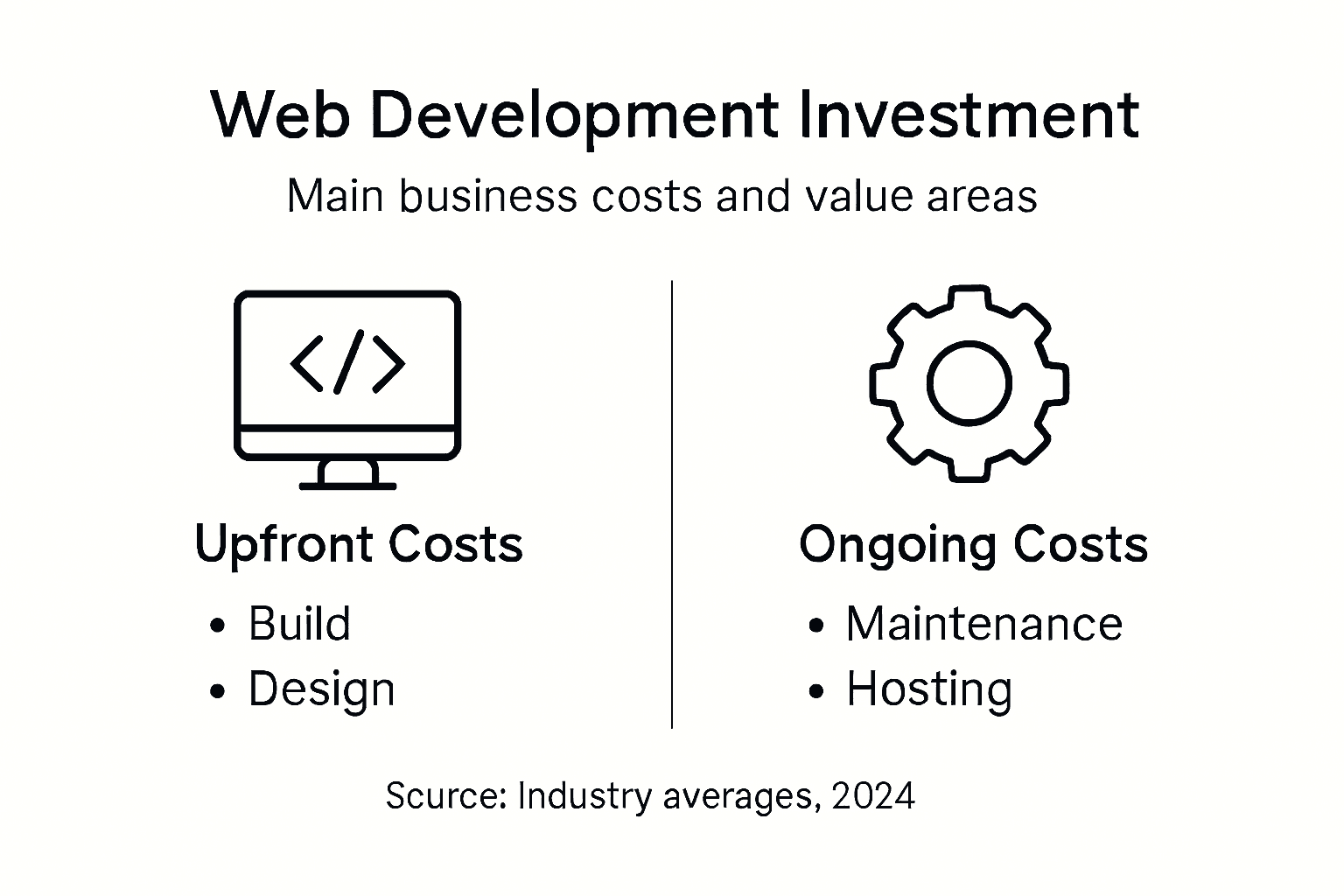
Website development costs depend on project scope, design complexity, and feature integration, with ongoing expenses including maintenance and hosting. Skipping these considerations leads to budget overruns and frustrated teams.
Here’s what typically influences your costs:
- Design complexity: Custom designs cost more than template-based sites but look professional and convert better.
- Feature requirements: Booking systems, e-commerce functionality, and integrations add significantly to costs.
- Content creation: Photography, copywriting, and video production require separate budgets.
- Ongoing maintenance: Updates, security patches, and technical support happen every month.
- Hosting and domain: Annual costs for reliable, fast hosting matter more than you’d think.
Breaking Down Your Investment
Initial development is just one piece. Most businesses spend more on maintenance over three years than they spent building the site originally.
Initial build costs typically range from £2,000 for simple sites to £15,000+ for complex e-commerce platforms. This covers design, development, and launch.
Monthly hosting and maintenance costs £50 to £500 depending on complexity. A £5-per-month hosting provider often means poor performance and security risks.
Annual content updates include adding products, refreshing pages, and adjusting features. This requires either in-house staff or ongoing development support.
Security and backups aren’t optional. Cyber attacks cost businesses thousands. Proper security infrastructure is non-negotiable.
To clarify website costs and investment value over time, consider this summary table:
| Investment Area | Typical Range | Business Implication |
|---|---|---|
| Initial Build | £2,000-£15,000+ | Sets up site, initial design |
| Monthly Maintenance | £50-£500 | Supports reliability, updates |
| Hosting & Domain | £50-£200/year | Impacts speed and security |
| Content & Marketing | Varies, ongoing | Keeps site competitive |
| Security Measures | Critical, ongoing cost | Protects business reputation |
A cheap website that generates zero customers costs more than a quality site that brings in business. Strategic investment in web development yields substantial returns by enhancing credibility and customer engagement.
Why Cheap Websites Cost More
Template-based websites built on cheap platforms seem attractive until you need customisation. Then you’re stuck.
A local plumber using a £99 website builder can’t add a proper booking system without paying £50 monthly. A carpentry firm can’t showcase their portfolio effectively. A service business can’t integrate with scheduling software.
You end up paying more for piecemeal solutions than you would for a proper custom build.
Long-Term Value Perspective
Long-term costs including hosting, maintenance, and scalability significantly influence overall value and business growth potential. Investing adequately ensures better performance and security.
A quality website that handles growth costs less long-term than rebuilding when you outgrow a cheap solution. That rebuild wastes months and money.
Consider the return: if a website generates even three extra customers monthly, it pays for itself. Most business websites generate far more.
Pro tip: Request a detailed cost breakdown covering initial development, monthly maintenance, hosting, and three-year total investment before committing-avoid surprises later.
Common Mistakes When Developing Business Websites
Most business websites fail not because of bad intentions, but because of predictable, preventable mistakes. Learning what goes wrong before you build saves thousands of pounds and months of frustration.
The difference between a website that works and one that doesn’t often comes down to decisions made during development. These aren’t technical mysteries-they’re common pitfalls you can avoid.
Common web development mistakes include skipping planning, neglecting mobile responsiveness, and failing to optimise performance, leading to poor user experiences and increased bounce rates. Thoughtful preparation and rigorous testing prevent these failures.
Here are the mistakes that cost businesses the most:
- No clear strategy: Building without defining goals wastes time and money on the wrong features.
- Poor mobile optimisation: Most visitors use phones. A site that doesn’t work on mobile loses customers immediately.
- Slow loading speeds: Pages that take five seconds to load lose 40% of visitors before they arrive.
- Outdated design: Websites that look ten years old damage credibility before visitors read anything.
- Unclear calls-to-action: Visitors don’t know what you want them to do, so they leave.
- No testing before launch: Bugs, broken forms, and payment failures discovered after launch damage trust.
The Planning Phase Matters Most
Skipping planning seems like saving time. It’s actually the most expensive mistake you can make.
Before coding starts, answer these questions: Who are your customers? What should they do on your site? How will you measure success? Without these answers, your developer builds in circles.
A hospitality business in Lincolnshire needs booking functionality. A carpentry firm needs portfolio galleries. An e-commerce business needs product filters. Generic solutions fail because they don’t solve your specific problems.
Neglecting strategy during development is like building a house without blueprints-you waste materials, create rework, and end up with something that doesn’t fit your needs.
Speed and Mobile Responsiveness Are Non-Negotiable
Website speed and mobile optimisation directly impact user engagement and revenue, with poor performance causing lost customers and damaged brand reputation. These aren’t optional features-they’re fundamental requirements.
Your site must load in under three seconds on mobile networks. This means optimised images, efficient code, and fast hosting. Visitors won’t wait.
Mobile-first design is non-negotiable. Over 65% of web traffic comes from phones. A site designed for desktop then squeezed onto mobile frustrates users and kills conversions.
Test your site on actual phones with slow internet connections. Your office Wi-Fi lies to you about performance.
Content and User Experience Failures
Technical perfection means nothing if visitors can’t find what they need. Confusing navigation, unclear messaging, and poor organisation cost sales.
Visitors should understand your value proposition within three seconds. Write clear headlines. Remove jargon. Show real photos of your team and actual customer reviews.
Forms that ask unnecessary questions reduce completion rates. Keep them short. Only ask what you actually need.
Broken links, outdated information, and typos signal that your business doesn’t care about details. Visitors assume your service quality matches your website quality.
Testing Prevents Disaster
Launching without testing is like driving without checking your brakes. Something will break, and it’ll happen in front of customers.
Test contact forms, payment processing, email confirmations, and booking systems on real devices. Test with slow internet. Test with different browsers. Test with accessibility tools to ensure visitors with disabilities can navigate.
Bugs discovered after launch damage credibility far more than taking an extra week to fix them beforehand.
Pro tip: Before launch, create a testing checklist: form submission, payment processing, mobile display, page speed, broken links, and accessibility-verify each item works across devices.
Unlock Your Business Potential with Expert Web Development
The article highlights key challenges such as the need for a clear web development strategy, seamless functionality, and scalable solutions tailored to your business goals. You understand the importance of combining design and development to build credible, efficient websites that attract and retain customers while automating vital operations. Whether you aim to generate leads, increase revenue, or reduce administrative burdens, your digital platform must reflect those priorities.
At WebFuZsion, we specialise in custom websites and interactive solutions designed specifically for small to medium-sized businesses in Grantham, Lincolnshire and beyond. Our web development services integrate the critical features your site needs to perform well-booking systems, secure e-commerce, mobile responsiveness, fast loading times and more. We help you avoid common pitfalls like unclear calls-to-action and poor mobile optimisation. Let us build a website that is more than just an online presence: a true business asset driving success. Explore our custom website solutions to start transforming challenges into opportunities today.
Are you ready to elevate your business with a website that works for you 24/7? Visit WebFuZsion now to discuss your project and receive a tailored plan that aligns perfectly with your goals.
Recommended
- What Is Web Design and Why It Matters | WebFuZsion Blog | WebFuZsion
- Do Businesses Still Need Websites? The… | WebFuZsion Blog | WebFuZsion
- The Importance of Having a Business… | WebFuZsion Blog | WebFuZsion
- Why Invest in Custom Websites for Business Growth | WebFuZsion Blog | WebFuZsion
- blog | Penetas Partner in Ondernemen
- Droinservice: il nuovo sito B2B guidato dall’AI