


Every few weeks I see another article telling Lincolnshire business owners what a "good local website" looks like. Most of them stay safely general: be fast, be mobile-friendly, have clear calls to action. True, but not much use if you can't see what any of that looks like in practice.
So instead of principles in the abstract, here's what actually separates a website that pulls in enquiries from one that quietly sits there - using real sites I've built for real Lincolnshire businesses, not hypotheticals.
It's easy to write generic advice about "good design" without ever pointing at a real example. It's harder - and more useful - to show you the actual decisions behind a site that's currently converting visitors into enquiries for a business down the road from you. That's the approach here.
1. It's built for how your specific customers search
A conference venue, a sports psychologist, and a forensic video expert do not need the same website - even though all three are "professional services."
When I built the site for The Gingerbread Grantham, a flexible events and conference venue at South Kesteven Sports Stadium, the priority was letting someone picture their event: clear corporate, celebration, and community hire paths, with facilities and catering front and centre. Someone booking a Christmas party searches completely differently to someone booking a corporate away-day, and the site has to answer both without making either feel like an afterthought.
Compare that to OB Sport Psychology - Oliver Barry's practice supporting athletes and teams. Nobody arrives at that site browsing. They arrive searching for credibility: qualifications, evidence-based methods, a clear way to get in touch. The design does almost the opposite job of the venue site - less "explore options," more "confirm you're legitimate, fast."
The lesson isn't "have nice photos" or "use a clean layout." It's that your site's structure should be built backwards from the specific decision your customer is making, not from a generic template of what a business website "should" include.
2. It loads fast - because Lincolnshire's mobile searches don't wait
A large share of local searches - "web design Sleaford," "solicitor Stamford," "forensic video expert" - happen on a phone, often outdoors or between jobs. If a site takes several seconds to load because it's carrying a page builder's worth of unused code, most people are gone before they see anything.
Why hand-coded Next.js beats page builders
Every site I build - including Forensic Video Services, a site aimed at courts, police forces, and legal professionals who need to trust a company within seconds - is hand-coded in Next.js rather than assembled from Elementor or Divi templates. That's not a technical flex; it's the difference between a page that feels instant and one that feels like a wait. For a site whose entire job is projecting expertise to a skeptical, professional audience, that speed is part of the credibility, not separate from it.
Speed also compounds. A fast site keeps people scrolling, which gives Google a positive engagement signal, which supports rankings, which brings more of the right visitors in the first place. Slow sites lose on all three counts at once.
3. It tells Google - and the customer - exactly where you operate
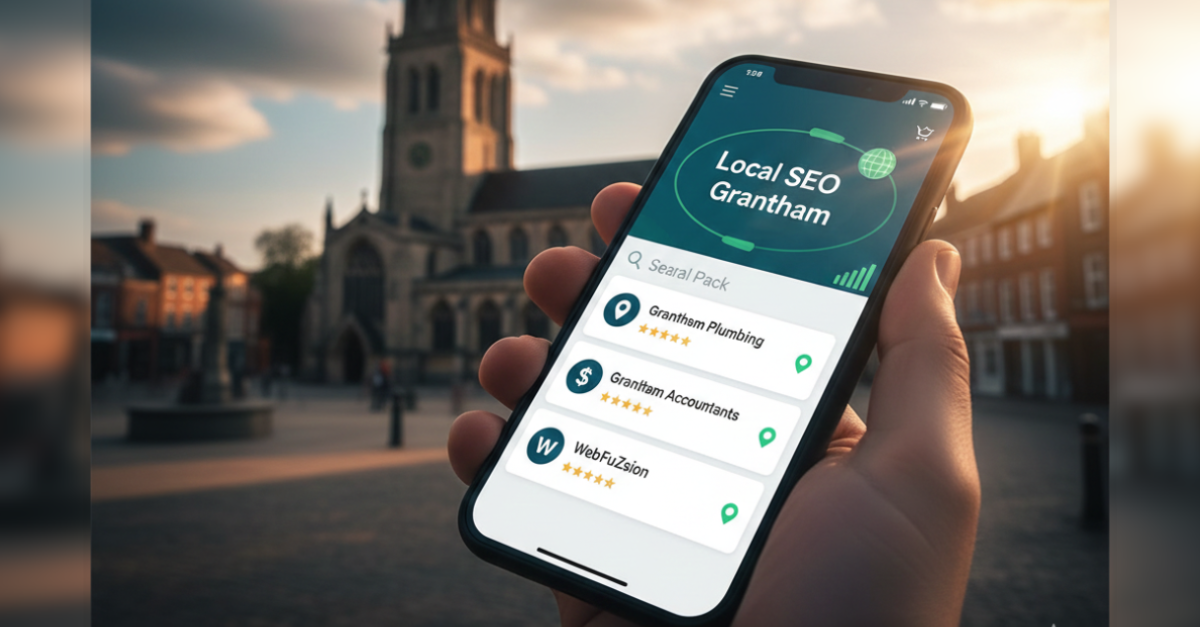
Local SEO isn't just about having "Grantham" on the page. It's structured data: Local Business schema, consistent location information, and content that actually names the towns and industries you serve rather than vague "serving the local area" language.
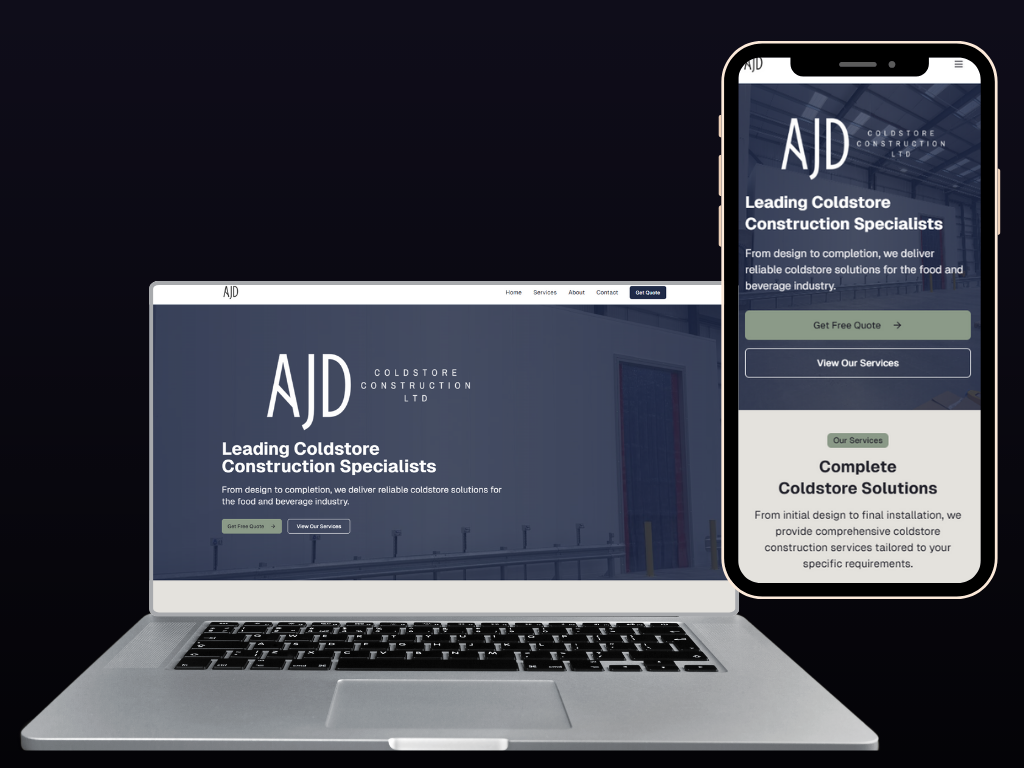
This matters more once a business grows past its home town. AJD Coldstore Construction, a Grantham-based specialist with over 15 years delivering temperature-controlled construction across the UK, needed a site that read as credible to a national audience while still being clearly rooted in Lincolnshire. That balance - local trust signals without looking like you only work in one postcode - is a structural decision, not a design flourish.
4. It's honest about pricing before anyone has to ask
This is the one most local competitors skip entirely. Plenty of Lincolnshire web design sites make you fill in a form and wait for a call before you find out if you're looking at £500 or £5,000. That's friction that costs enquiries.
What the three WebFuZsion tiers include
Every WebFuZsion package is priced and published: £500 for a starter one-page site, £800 for a business site up to five pages, £1,200+ for premium builds. Whatever industry you're in, you know what you're looking at before you ever pick up the phone.
Transparent pricing also filters conversations before they start. Someone who knows roughly what a business site costs arrives ready to talk about their actual project, not to negotiate from a standing start - which makes the whole process faster for both sides.
5. It gets maintained, not just launched
A website is not a one-off purchase. Security patches, content updates, and performance monitoring are what keep a site from quietly degrading over the two or three years after launch - which is exactly when most local business sites start slipping down the rankings without anyone noticing why.
6. It's built to grow with the business, not replaced every few years
A lot of small business websites get treated as disposable - built once, ignored, then fully rebuilt from scratch a few years later when they finally feel outdated. That's an expensive cycle, and most of it is avoidable.
A site built on clean, modern foundations rather than a bloated page-builder stack can usually be extended rather than rebuilt: new pages, new features, a new service area, without starting over. That's part of why the underlying build choice matters as much as the initial design - it determines whether your website is an asset you build on or a liability you'll be replacing again in eighteen months.
The real difference
None of this is complicated. But it does mean building a site around your actual customers and your actual industry, rather than a generic "professional business website" template - and being able to point at real examples of it working, not just describe it in the abstract.
If you're not sure which of these your current site is actually doing, that's usually the fastest way to work out what's holding it back - not another redesign, just an honest look at what's there now.
If you want a second opinion on whether your current site is doing this - or isn't - get in touch for a free, no-obligation review.
Want to see the full projects mentioned here? Browse our portfolio or get a quote for your own business.