



Deciding to upgrade your website can feel daunting for many small business owners across Lincolnshire. Balancing cost, style, and local appeal is often a challenge, especially when aiming to attract nearby customers. This guide offers practical steps that focus on defining clear business goals, understanding local audience requirements, and evaluating design providers. By leveraging crystal-clear business objectives, you can turn your website into a tool that supports growth and strengthens your Lincolnshire brand.
Brief Summary
| Main Point | Explanation |
|---|---|
| 1. Define Clear Business Goals | Assess your organisation’s goals to align your website with its strategic purpose and yields. |
| 2. Understand Local Audience | Analyse the unique characteristics of your local audience to create a resonant and authentic website design. |
| 3. Evaluate Design Styles | Consider various design styles to ensure your website aligns with brand identity and user expectations. |
| 4. Select the Right Provider | Choose a design provider that matches your needs, focusing on their portfolio and service range. |
| 5. Conduct Usability Testing | Test your website with real users to assess navigation, performance, and overall user satisfaction. |
Step 1: Define Business Goals and Website Requirements
Choosing the right website design begins with crystal-clear business objectives. Your website isn’t just a digital brochure; it’s a strategic tool to achieve specific organisational outcomes. Establishing precise website goals helps align your online presence with broader business strategies.
To define your website requirements effectively, consider these critical aspects:
- Revenue Generation: Determine how your website will directly contribute to sales
- Customer Engagement: Identify specific interaction goals with your target audience
- Brand Positioning: Outline how the design will communicate your unique value proposition
- Functional Necessities: List core features required for your business model
Successful website planning requires a methodical approach. Start by documenting your primary business objectives, then translate these into specific, measurable website requirements. This might involve creating user personas, mapping customer journeys, and understanding precisely how digital platforms can support your commercial goals.
Your website should be a dynamic tool that evolves with your business, not a static digital placeholder.
Pro tip: Conduct a thorough audit of your current digital presence and competitive landscape before finalising your website design requirements.
Step 2: Assess Local Audience Preferences and Branding
Understanding your local audience’s unique characteristics is fundamental to creating a website that truly resonates with potential customers. Effective branding strategies require a comprehensive approach that goes beyond surface-level design, diving deep into the cultural nuances and preferences of your target market.
To assess local audience preferences effectively, consider these strategic steps:
- Demographic Research: Analyse age groups, income levels, and professional backgrounds in your local area
- Cultural Insights: Understand regional communication styles and visual preferences
- Competitive Landscape: Review how local businesses present themselves online
- Customer Feedback: Gather insights from existing clients about what appeals to them
Your website’s design should reflect the unique identity of your local business community. This means adapting your visual language, colour palette, and messaging to align with local expectations and cultural sensitivities. Local audiences appreciate websites that feel familiar yet professionally crafted, striking a delicate balance between global standards and regional authenticity.
Your brand’s digital presence should feel like a natural extension of your local business identity.
Pro tip: Conduct informal interviews with local customers to gain nuanced insights that standard market research might miss.
Step 3: Evaluate Website Design Styles and Features
Selecting the right website design involves more than aesthetic preferences. Website quality evaluation requires a comprehensive approach that considers multiple dimensions of digital performance and user experience.
When assessing potential design styles, focus on these critical evaluation criteria:
- Visual Aesthetics: Analyse colour schemes, typography, and overall visual harmony
- User Experience: Assess navigation intuitiveness and interaction flow
- Responsiveness: Check design adaptability across different devices and screen sizes
- Performance Metrics: Evaluate loading speeds and technical efficiency
- Content Accessibility: Ensure clear information hierarchy and readability
Different design styles such as Minimalist, Swiss, or Contemporary approaches offer unique advantages for businesses. Your selection should align closely with your brand identity, target audience expectations, and functional requirements. A well-chosen design communicates professionalism while providing seamless user interaction and supporting your core business objectives.

The following table summarises how different website design styles align with various brand characteristics:
| Design Style | Best For | Distinctive Feature |
|---|---|---|
| Minimalist | Modern tech startups | Clean, uncluttered layout |
| Swiss | Corporate consultancies | Grid-based, balanced look |
| Contemporary | Creative agencies | Dynamic, bold visuals |
| Classic | Legal or financial firms | Trustworthy, timeless feel |
Your website’s design is a strategic communication tool, not just a visual decoration.
Pro tip: Request design mockups from multiple designers to compare how different styles interpret your brand’s unique personality.
Step 4: Select Suitable Design Providers and Packages
Choosing the right design provider involves more than comparing price tags. Creative design solutions require a strategic approach that matches your business’s unique requirements and budgetary constraints.
When evaluating potential design providers, consider these essential selection criteria:
- Portfolio Quality: Review previous work demonstrating relevant industry experience
- Service Range: Assess comprehensive design capabilities and specialisation areas
- Pricing Transparency: Compare package structures and inclusions
- Technical Capabilities: Evaluate design tools and technological expertise
- Client Support: Check communication responsiveness and project management approaches
Your ideal design partner should offer a flexible package that adapts to your specific business needs. This means understanding your brand’s unique personality, technical requirements, and growth potential. A good design provider will not just deliver a website but create a digital platform that serves as a powerful marketing and communication tool for your business.
The right design partner transforms your digital vision into a compelling online reality.
Pro tip: Request detailed project proposals from multiple providers to compare their strategic understanding of your business objectives.
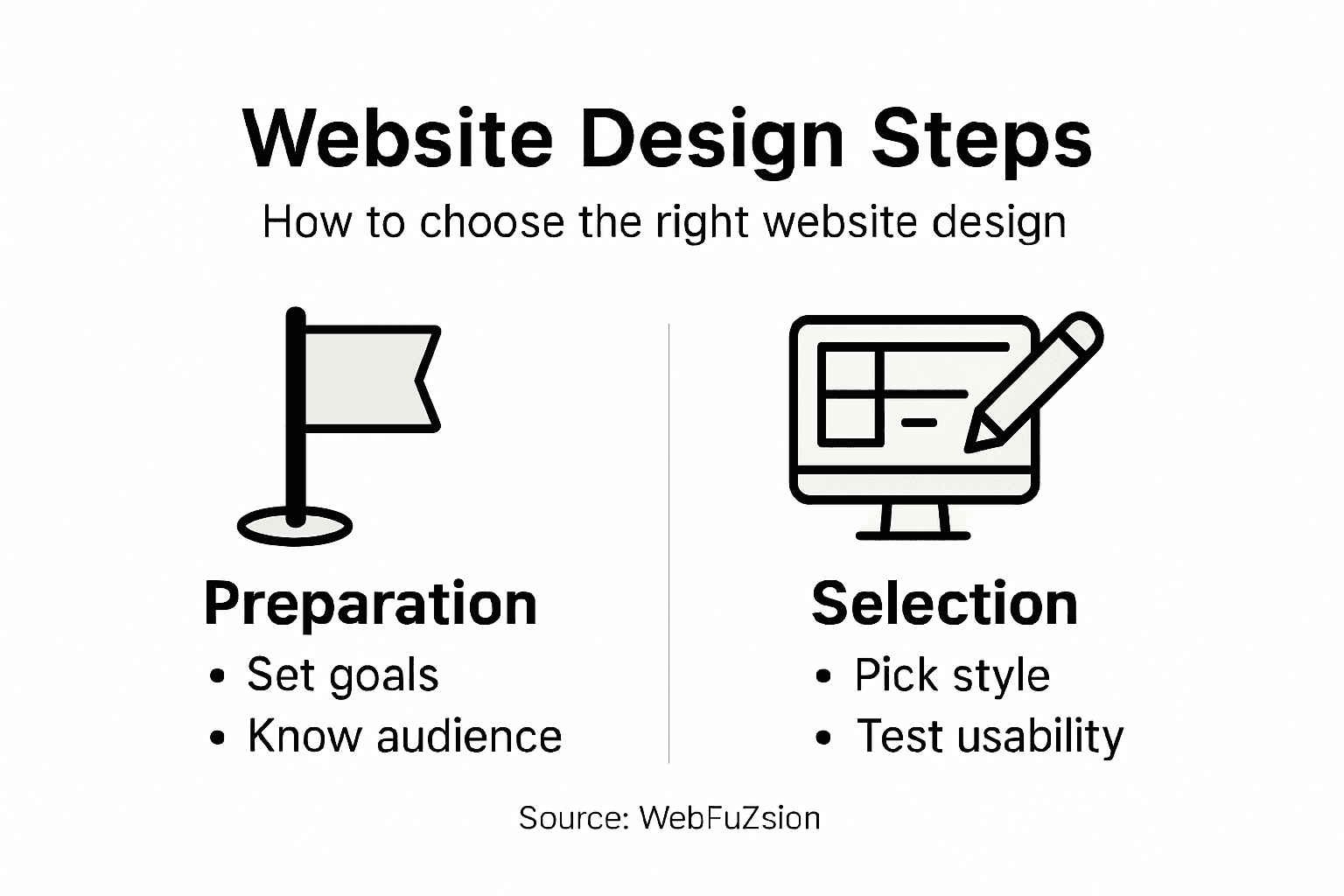
Step 5: Review and Test Design for Usability and Effectiveness
The final stage of website design involves rigorous evaluation and validation. Usability testing methods provide critical insights into how users interact with your digital platform, ensuring your website meets both aesthetic and functional requirements.
When conducting a comprehensive usability review, focus on these key assessment areas:
- Navigation Flow: Test user journey and intuitive page transitions
- Responsiveness: Check performance across different devices and screen sizes
- Content Readability: Assess typography, colour contrast, and information hierarchy
- Interaction Elements: Evaluate button placements, form functionality, and user engagement features
- Loading Performance: Measure page speed and technical responsiveness
Effective usability testing involves both quantitative metrics and qualitative user feedback. Recruit a diverse group of potential users who represent your target audience, and observe their interactions with the website. Pay attention to their natural navigation patterns, points of confusion, and overall emotional response to the design.
Here is a quick reference guide to usability testing methods and their typical benefits:
| Testing Method | Participant Type | Key Benefit |
|---|---|---|
| Moderated Session | Selected users | Direct observation |
| Unmoderated Test | Wide audience | Broad behavioural insights |
| A/B Testing | Random visitors | Conversion rate comparison |
| Survey Feedback | All user groups | Subjective satisfaction data |
Usability is not about perfection, but about creating an intuitive and seamless user experience.
Pro tip: Conduct multiple rounds of testing with different user groups to capture comprehensive insights and iteratively improve your website design.
Choose Website Design That Truly Elevates Your Business
Selecting the right website design is a decisive step for any small or medium-sized business aiming to align digital presence with clear business goals and local audience expectations. If you feel overwhelmed by defining your website requirements or unsure how to translate your brand identity into a seamless, engaging user experience, you are not alone. Key challenges like ensuring responsiveness, achieving intuitive navigation, and balancing aesthetics with functionality demand expert insights and tailored solutions.
At WebFuZsion, we specialise in crafting custom websites that solve these very challenges. Our approach starts by understanding your unique business objectives and audience preferences to deliver design styles that communicate professionalism and local authenticity. Whether you need a full website build, a redesign, or SEO enhancements, our experienced team offers flexible packages designed to support startups and established businesses alike. Experience the difference with professional, responsive web design and ongoing maintenance tailored precisely for your growth.
Ready to transform your website into a powerful marketing tool that truly reflects your business needs? Discover how our custom website design and SEO services can help you attract and engage your local audience now. Visit WebFuZsion and take the next step towards a digital platform built for success.
Recommended
- What Is Web Design and Why It Matters | WebFuZsion Blog | WebFuZsion
- How to Build a Business Website for Small Companies | WebFuZsion Blog | WebFuZsion
- 7 Essential Tips for Small Business Websites Success | WebFuZsion Blog | WebFuZsion
- Why Invest in Custom Websites for Business Growth | WebFuZsion Blog | WebFuZsion
- Studio201 - Tworzymy aplikacje, systemy i programy